

Most enterprise AI systems that deal with customer analytics still rely on a fairly straightforward architecture: embeddings, vector search, recommendation models, and increasingly an LLM sitting on top to summarize or personalize the output. That approach works surprisingly well when the objective is retrieving similar content or generating conversational experiences, but customer behavior itself is rarely that simple. People do not behave as isolated datapoints. Their decisions are influenced by sequences of interactions, communities, sentiment shifts, external events, friction points, and relationships that evolve over time. This is where the recent direction of GraphRAG and graph-native AI architectures starts to become much more interesting than traditional retrieval systems.
What caught my attention in the recent Neo4j announcements around Structured AI and Virtual Graph is not just the technology itself, but the broader architectural shift they represent. The industry seems to be moving away from the idea that AI systems should only retrieve documents and generate text. Instead, there is a growing focus on building systems capable of reasoning over connected knowledge. In practice, that means combining semantic understanding from LLMs with structured representations of relationships, entities, and behavioral context.
This becomes particularly relevant in customer behavior analysis. Imagine a large retail or e-commerce company trying to understand why certain users suddenly disengage after months of activity. A traditional vector-based RAG pipeline might retrieve support conversations, browsing history, campaign interactions, or previous purchases that look semantically related. That can help surface relevant information, but it still struggles to explain the actual dynamics behind customer decisions. The real signal often sits in the relationships between events rather than in the events themselves.
For example, a churn event may not be caused by a single interaction, but by the combination of delayed deliveries, negative product sentiment spreading through a social community, repeated checkout friction, and exposure to a specific influencer or campaign sequence. Those patterns are relational by nature. They involve time, dependencies, indirect influence, and multi-hop connections across systems that are difficult to model with embeddings alone.
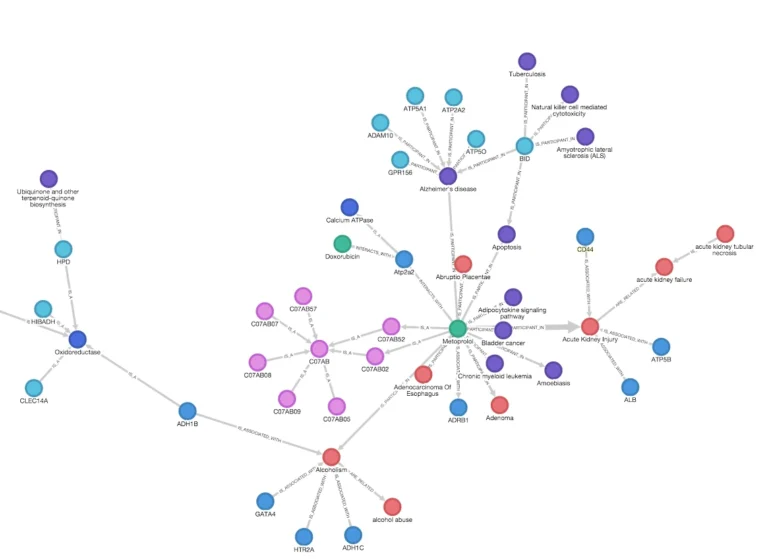
This is precisely where GraphRAG starts to feel more compelling than a purely vector-based approach. Instead of treating customer interactions as disconnected chunks of text, the system can build a connected behavioral graph where entities such as customers, products, campaigns, creators, support incidents, and transactions become part of a navigable structure. LLMs can then extract structured knowledge from unstructured interactions, while graph traversal provides the contextual expansion needed for deeper reasoning.
The interesting part is that the output changes qualitatively. Rather than producing a generic statement such as “customers who bought X also bought Y,” the system can start identifying more nuanced behavioral patterns. It can detect that a segment of users exposed to shipping delays and negative community sentiment tends to abandon purchases after specific campaign touchpoints, or that churn probability increases when multiple friction signals appear together within a short period of time. That level of traceability is extremely difficult to achieve through semantic similarity alone.
Neo4j’s Structured AI approach is particularly interesting because it pushes the LLM beyond free-form text generation and into the generation of reusable knowledge structures. In many enterprise systems, one of the biggest problems is not the lack of data but the fragmentation of it. Customer information lives across CRMs, analytics platforms, support systems, marketing tools, warehouses, and increasingly external channels such as communities or social platforms. Structured extraction combined with graph modeling creates a much more natural way to connect those silos and preserve the relationships between them.
What makes this trend even more interesting is that Neo4j is clearly not alone. Different companies are converging toward very similar ideas, even if they approach them from different angles. MarkLogic, for instance, has spent years positioning semantic metadata and knowledge graphs as a foundation for enterprise knowledge management and contextual search. Their philosophy has always leaned toward connecting documents through meaning and relationships rather than treating search as simple keyword retrieval. That becomes highly relevant in customer intelligence scenarios where identity, intent, and context constantly evolve.
Google has arguably been operating at this level for years through its internal knowledge graph systems powering Search, recommendations, advertising, and increasingly Gemini-related experiences. The company’s broader direction suggests that semantic retrieval by itself is no longer sufficient. The combination of embeddings, graph relationships, multimodal reasoning, and agent-like orchestration appears to be becoming a foundational pattern for large-scale AI systems.
Microsoft is moving in a very similar direction through products such as Microsoft Fabric, Copilot, Azure AI Search, and its graph-oriented integrations across the enterprise stack. What is interesting is not any single product announcement, but the underlying convergence happening across the industry. Whether the entry point is databases, enterprise search, copilots, or analytics platforms, the architecture increasingly looks the same: semantic retrieval combined with structured knowledge and relational reasoning.
Of course, there are still important technical tradeoffs. Graph reasoning introduces complexity that traditional vector search largely avoids. Embedding retrieval is relatively fast and operationally simple, while graph traversal can become computationally expensive when datasets are highly connected or when reasoning requires multiple hops across large behavioral networks. That raises legitimate questions around latency and scalability, especially for real-time systems.
In practice, though, not every workload requires millisecond responses. Customer segmentation, churn analysis, campaign optimization, fraud investigation, or behavioral intelligence systems can often tolerate additional latency if the contextual quality and explainability improve significantly. Real-time recommendation systems may still need hybrid approaches with partially materialized graphs, cached traversals, or lightweight retrieval strategies. The likely outcome is not that graphs replace vector search, but that enterprise AI systems increasingly combine both approaches depending on the depth of reasoning required.
What feels most important about this evolution is that it changes the role of AI systems inside organizations. The focus is slowly shifting away from simply generating responses toward generating and reasoning over connected knowledge. That is a very different paradigm. It moves AI closer to understanding behavioral context, relationships, dependencies, and long-term organizational memory rather than just predicting the next plausible sentence.
If that direction continues, GraphRAG may end up becoming less about improving retrieval quality and more about building AI systems capable of understanding how things are connected. And for domains like customer behavior intelligence, that shift could end up being far more significant than another incremental improvement in prompting or embeddings.