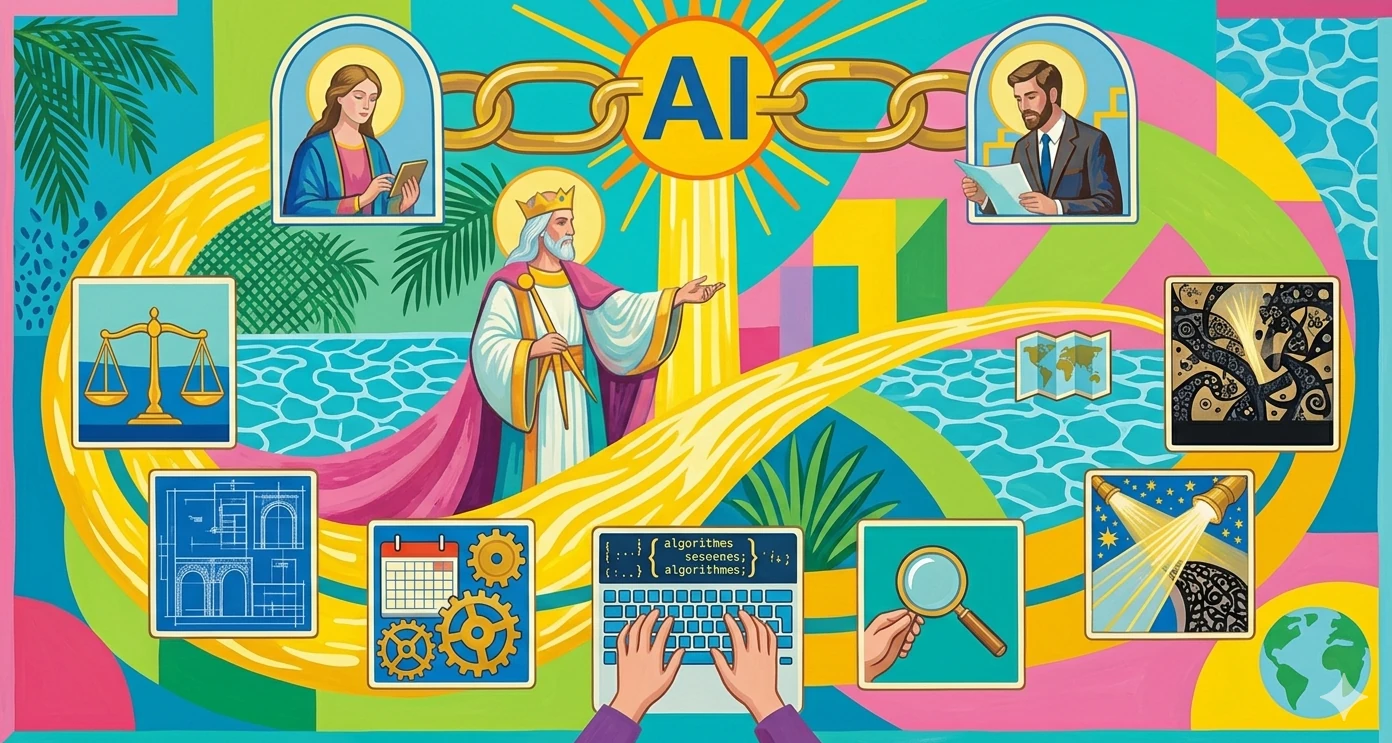

Over the course of this series, we have explored how Artificial Intelligence is fundamentally rewriting the rules of the Software Development Life Cycle (SDLC). From the initial feasibility analysis in Phase 1 to the long-term technical debt management in Phase 7, AI is no longer just a “code autocomplete” feature—it is an autonomous, reasoning partner embedded in every stage of software creation.
But for CTOs, Engineering Managers, and DevOps leaders, the real challenge isn’t understanding what AI can do; it’s knowing which tools to choose. The AI landscape is crowded, and adopting a fragmented mix of tools can lead to integration nightmares and wasted budgets.
In this comprehensive guide, we consolidate the AI tools explored in this series into a unified, comparative framework. We will break down the top AI solutions by their core strengths, compare the new wave of agentic coding tools, and provide a strategic roadmap for building your ultimate AI-powered SDLC.
1. The Agentic Coding Revolution: A Deep-Dive Comparison (Phase 4 Focus)
The most explosive growth in AI development tools is in Phase 4 (Coding). The market has split into three distinct categories. Choosing the right one depends on your team’s workflow and desire for autonomy.
| Tool Category | Top Contenders | How it Works | Best For… |
|---|---|---|---|
| CLI-Native Agents | OpenCode, Claude Code, Aider, OpenAI Codex CLI | Lives in the terminal. Reads the whole repo, executes shell commands, runs tests, and iterates autonomously via text prompts. | Senior engineers, Vim/Neovim users, and teams who want deep filesystem access, Git integration, and zero context-switching. |
| IDE-Integrated Copilots/Agents | Cursor (Agent Mode), GitHub Copilot, Windsurf | Lives inside a visual IDE (like VS Code). Offers inline autocomplete, chat, and multi-file editing within a graphical interface. | Teams transitioning to AI, developers who prefer visual diff-checking, and those who want AI tightly coupled with standard IDE debugging tools. |
| Fully Autonomous Engineers | Devin, Factory, Cosine Genie | Operates in a cloud sandbox. Takes a Jira ticket/Issue, plans, codes, tests, and submits a PR with minimal human intervention. | Handling repetitive backlog grooming, migrating legacy code, and freeing up senior devs for complex architectural work. |
The Verdict for Coding: If your team values transparency, deep context, and terminal workflows, CLI agents (like OpenCode and Claude Code) are currently the most powerful. If your team prefers visual workflows, Cursor is the undisputed leader.
2. Comparative Matrix: AI Tools Across the Entire SDLC
To build a cohesive toolchain, you need the right AI for each specific phase. Here is a comparative breakdown of the top tools by their primary SDLC function.
A. Planning, Requirements & Product Management (Phases 1 & 2)
Goal: Turn ambiguity into structured, actionable, and feasible blueprints.
| Tool | Core AI Superpower | Key Differentiator |
|---|---|---|
| Atlassian Intelligence | Contextual task breakdown. | Best if you are already deep in the Jira/Confluence ecosystem. |
| Productboard | Market & feature prioritization. | Connects customer feedback directly to AI-generated feature specs. |
| Visure Requirements | Ambiguity & compliance checking. | The gold standard for highly regulated industries (aerospace, medical). |
| Miro AI / FigJam | Visual flow & gap analysis. | Best for translating whiteboard brainstorming into structured requirements. |
B. System Design & Architecture (Phase 3)
Goal: Generate secure, scalable blueprints and infrastructure code.
| Tool | Core AI Superpower | Key Differentiator |
|---|---|---|
| Eraser AI | Prompt-to-Diagram generation. | Instantly creates beautiful C4/UML diagrams and Terraform code from text. |
| Amazon Q Developer | Cloud architecture optimization. | Unbeatable for AWS-specific infrastructure design and Well-Architected checks. |
| v0 by Vercel / Galileo | Prompt-to-UI generation. | Generates production-ready React/Tailwind frontend components instantly. |
C. Testing & Quality Assurance (Phase 5)
Goal: Achieve 100% coverage with zero-maintenance scripts.
| Tool | Core AI Superpower | Key Differentiator |
|---|---|---|
| Applitools | Visual AI regression. | Mimics the human eye; ignores dynamic noise, catches real UI bugs. |
| Qodo (CodiumAI) | Edge-case unit test generation. | Analyzes code logic to write tests that actually challenge the code’s integrity. |
| mabl / testRigor | Self-healing & No-Code E2E. | Auto-repairs broken UI locators; allows QA to write tests in plain English. |
| Launchable | Predictive test selection. | Uses ML to run only the tests affected by a code change, slashing CI times. |
D. Deployment, DevOps & Maintenance (Phases 6 & 7)
Goal: Zero-downtime releases, predictive AIOps, and automated tech-debt management.
| Tool | Core AI Superpower | Key Differentiator |
|---|---|---|
| Harness (AIDA) | Autonomous CI/CD & rollback. | AI acts as the release manager, auto-rolling back canary deployments if anomalies are detected. |
| Datadog (Bits AI) / Sentry (Seer) | Root-cause analysis & triage. | Instantly correlates a production error to the exact code commit that caused it. |
| Snyk / Mend.io | Reachability & auto-patching. | Doesn’t just find vulnerabilities; AI writes and tests the PR to fix them safely. |
| Swimm | Living documentation. | Auto-syncs documentation with code changes, preventing “rotting docs.” |
3. The “Cross-Phase” Titans: Tools That Span the SDLC
Some AI platforms are so versatile that they blur the lines between phases. If you want to consolidate your AI stack, these are the heavyweights:
- Claude (Anthropic) & Claude Code: With its massive context window and deep reasoning, Claude is exceptional across the board. It excels at complex architectural reasoning (Phase 3), acts as the ultimate terminal coding agent (Phase 4), and is unmatched in deciphering and refactoring legacy code (Phase 7).
- GitHub Copilot / GitHub Copilot Workspace: No longer just an autocomplete tool. Copilot now spans from generating code (Phase 4), to reviewing PRs and writing CI/CD scripts (Phase 6), to autonomously resolving GitHub Issues end-to-end.
- GitLab Duo: Similar to GitHub, it offers a unified AI experience across code suggestion, vulnerability remediation, and CI/CD pipeline debugging within the GitLab ecosystem.
4. Strategic Playbook: How to Implement Your AI SDLC
Buying the tools is only 10% of the battle. To achieve a true ROI, follow this phased implementation strategy:
- Step 1: Identify the Bottleneck. Don’t adopt AI everywhere at once. If your biggest pain is slow CI/CD, start with Launchable and Harness. If developers are drowning in boilerplate, start with Cursor or Claude Code.
- Step 2: Start with the “Inner Loop” (Phases 4 & 5). Coding and Testing offer the fastest, most measurable ROI. Equip your developers with CLI agents or IDE copilots, and integrate Qodo or Applitools into the pipeline. Measure the impact using DORA metrics (Deployment Frequency, Lead Time for Changes).
- Step 3: Secure the “Outer Loop” (Phases 6 & 7). Once coding is accelerated, the bottleneck shifts to deployment and maintenance. Implement Snyk for automated security patching and Datadog/Sentry for AI-driven observability.
- Step 4: Shift Left to Planning (Phases 1, 2 & 3). Finally, integrate AI into the earliest phases. Use Atlassian Intelligence or Productboard to ensure that the speed gained in coding isn’t wasted building the wrong features.
The Bottom Line
Building an AI-powered SDLC is not about finding a single “magic bullet” tool. It is about orchestrating a symphony of specialized AI agents.
The winners in the next era of software development won’t just be the companies that use AI to write code faster. The winners will be the companies that use AI to plan more accurately, design more securely, test more exhaustively, and maintain more proactively.
Evaluate your current bottlenecks, select the tools that fit your team’s culture (whether that’s CLI-native or IDE-integrated), and start building your ultimate AI toolchain today. The future of software isn’t just automated; it’s autonomous.